Protection equipment standards guide how facilities safeguard workers from hazards that occur during construction, manufacturing, maintenance and material handling. Every industry relies on these standards to reduce injuries, support compliance and keep operations steady. BC Industrial Supply supports companies across the United States with guidance and products that meet recognized regulations, along with repairs and rentals when teams need fast solutions.
Protection equipment covers a wide range of categories that include head protection, hand protection, respiratory protection, fall protection, hearing protection, eye and face protection, and high visibility gear. Standards give structure to each category so employers know how to select products that match the actual risks present. These standards also outline what testing must be completed and how manufacturers must label their products so they can be trusted in demanding industrial conditions.
How Standards Shape Equipment Selection
Standards influence the entire selection process because they define performance expectations before a product ever reaches the jobsite. Workers face hazards that vary in severity, frequency and duration. A general glove or generic face shield may look adequate at a glance, yet a closer review often reveals shortcomings. Approved standards clarify the difference between basic supplies and gear that can withstand impacts, chemicals, arc flashes or airborne contaminants.
Selection decisions become clearer when employers review the hazard type and compare it to specific required markings. This approach supports consistency across crews and shifts, especially at facilities with changing personnel. Training supervisors to recognize those markings also reduces the chance of mismatched or downgraded equipment.
Certification labels play a critical role because they provide proof that protective gear has passed required testing. Labels might reference ANSI, NFPA, OSHA, NIOSH or ASTM standards depending on the category. A missing or damaged label compromises the integrity of the equipment because there is no longer confirmation that it meets required benchmarks.
Head Protection Standards
Protective helmets serve as a frontline defense against falling objects, overhead equipment, electrical exposure and accidental contact with fixed structures. ANSI Z89.1 directs how these helmets must perform. This standard divides helmets into types and classes that reflect different hazards. Type I helmets are designed for top impact protection while Type II helmets offer both top and lateral protection.
Classes specify electrical rating. Class G helmets handle limited electrical exposure. Class E helmets withstand higher voltage. Class C helmets provide little or no electrical resistance and are usually chosen for comfort in environments focused on ventilation rather than electrical hazards.
Workers often select helmets based on comfort alone, which can create vulnerabilities. A closer look at the requirements reveals why the right type and class matter. Impacts are not limited to one direction and operations commonly involve electrical tools, conveyors and live equipment. A helmet built to a lower class rating may pass a visual check but fail during an unexpected event. Regular inspections are encouraged because sun exposure, chemicals and daily use degrade shell strength over time.
Eye and Face Protection Standards
Eye injuries occur quickly and often without warning. Grinding, welding, drilling and chemical transfer tasks expose workers to particles, sparks, splashes and bright light. ANSI Z87.1 sets the standard for eye and face protection and addresses several categories that include spectacles, goggles and face shields.
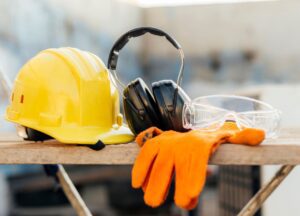
Markings on lenses indicate whether the product is designed for impact resistance, chemical splash protection or optical radiation. Tasks involving flying debris require high impact markings. Splash hazards call for sealed goggles that create a secure barrier. Welding operations must meet shade requirements that correspond to the intensity of the arc.
Fit is a major factor because gaps around the eyes increase exposure. Even a certified lens cannot protect fully if the frame does not sit correctly or if workers combine incompatible accessories. Fogging issues also push workers to remove eyewear temporarily, so anti fog coatings and proper ventilation are important components of compliance.
Hearing Protection Standards
Noise exposure accumulates over time and permanent hearing loss often develops before workers notice symptoms. OSHA sets permissible exposure limits and requires employers to use engineering controls when possible. When controls cannot reduce noise sufficiently, hearing protectors become essential. ANSI standards guide both earplugs and earmuffs.
Noise Reduction Ratings help employers compare products. A higher rating does not always mean better performance because comfort and fit influence real world effectiveness. Reusable plugs may suit some environments while disposable options improve hygiene in high turnover areas. Earmuffs offer consistent fit but may clash with helmets or face shields if not designed for compatibility.
Training is just as important as product selection. Workers commonly insert plugs incorrectly or wear earmuffs over hats, which reduces protection significantly. Facilities that conduct periodic fit checks see higher compliance and better long term outcomes.
Respiratory Protection Standards
Respiratory hazards range from dust and fumes to vapors and oxygen deficient environments. OSHA 1910.134 governs respiratory protection programs. NIOSH certification ensures that respirators meet performance requirements. Employers must evaluate the environment to determine whether particulate, gas and vapor or combination hazards exist.
Filtering facepiece respirators carry designations such as N95, R95 or P100. These codes indicate resistance level to oils and filtration efficiency. Half mask and full face respirators require proper cartridges matched to the hazard. Cartridge color codes simplify selection and reduce confusion. Workers may need organic vapor cartridges, acid gas cartridges, ammonia cartridges or multi gas options depending on the operation.
Fit testing remains a core requirement. Gaps around the seal reduce protection dramatically. Facial hair, incorrect strap tension and worn components cause leaks. A strong program includes medical evaluations, training on donning and doffing, storage procedures and a schedule for replacing filters.
Hand Protection Standards
Hands face cuts, abrasions, punctures, chemical contact and temperature extremes. ANSI/ISEA 105 outlines performance levels that relate to cut resistance, puncture resistance, abrasion resistance and chemical degradation. Gloves vary widely in material and construction. A glove that protects against mechanical hazards might offer little protection from solvents or caustic substances.
Cut resistance levels help employers match gloves to sharp tools, sheet metal or glass handling. Abrasion ratings support tasks involving repeated surface contact. Chemical gloves require more careful evaluation because breakthrough times vary by chemical type. Manufacturers provide charts that detail which materials perform best against specific liquids.
Sizing influences safety as well. Gloves that are too large snag easily and reduce dexterity. Gloves that are too tight may tear or cause fatigue. Proper care extends lifespan. Workers should check for swelling, discoloration or stiffness, which indicate chemical degradation.
Fall Protection Standards
Work at height introduces significant risks. OSHA 1926.502 outlines fall protection criteria while ANSI Z359 provides guidance on harnesses, lanyards, connectors and anchor systems. A fall protection system requires multiple compatible components. Harnesses must distribute force correctly. Lanyards and self retracting lifelines must limit arresting force. Anchor points must meet strength requirements.
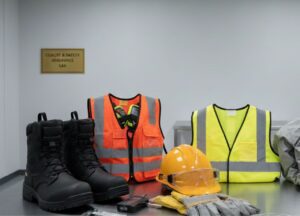
Proper selection depends on fall distance, anchoring options and worker movement. A fixed lanyard may suffice for stationary tasks but restrict mobility in broader work zones. Self retracting lifelines offer shorter free fall distance yet require careful consideration of swing hazards.
Inspection is critical because even minor wear can compromise performance. Webbing cuts, loose stitching and damaged hardware all signal replacement needs. Storing equipment correctly prevents UV damage, mold growth and premature aging.
High Visibility Apparel Standards
Visibility plays a major role in industrial yards, warehouses and roadway environments. ANSI/ISEA 107 categorizes garments based on the amount of reflective material and background fabric. Workers near moving vehicles, forklifts or heavy equipment require apparel that enhances visibility from all angles.
Classes range from basic vests to full body garments with sleeves and reflective stripes. Choosing the correct class depends on light conditions, traffic speed and environmental complexity. Reflective materials degrade with washing, dirt accumulation and abrasion. Teams should conduct regular checks and replace garments that no longer reflect adequately.
Building a Culture of Compliance
Protection equipment standards strengthen workplace safety when paired with consistent training, documentation and leadership support. Supervisors set the tone by modeling correct PPE use. New hires benefit from hands on demonstrations rather than written instructions alone. Shift meetings offer opportunities to reinforce correct selection and highlight near misses where PPE prevented injuries.
Recordkeeping serves more than compliance needs. Logs help identify patterns, track replacement cycles and assess whether certain tasks require upgraded equipment. A review of incidents often reveals that workers attempted to complete a task with the wrong gear or with equipment that had exceeded its service life.
Communication channels between workers and safety managers encourage reporting of damaged gear, discomfort issues or unclear requirements. Workers who feel heard are more likely to follow guidelines consistently. Simple adjustments such as providing different sizes or improving storage locations create long lasting improvements.
Conclusion
Protection equipment standards give structure and clarity to industrial safety. By aligning equipment selection with recognized requirements, employers reduce risk, strengthen compliance and support a safer workforce. Regular evaluations, ongoing training and clear communication ensure that protective equipment performs as intended. Industrial environments evolve with new tools, materials and processes, and these standards provide a stable reference that helps companies maintain a strong safety foundation.