
A sharp chain saw turns demanding cutting jobs into controlled, efficient work. Dull cutters force the saw to work harder, increase fuel consumption, and place unnecessary stress on the bar, chain, and engine. Operators often notice reduced cutting speed, crooked cuts, or fine sawdust instead of wood chips when the chain loses its edge.
Routine sharpening keeps a chain saw operating safely and efficiently. Proper maintenance also extends the life of the chain and guide bar. Many industrial supply companies assist contractors and maintenance teams with tool repair and sharpening services. Teams that rely heavily on cutting equipment sometimes choose professional repair support through suppliers like BC Industrial Supply, which offers tool repair and service solutions that help keep equipment operating without costly downtime.
Knowledge of proper sharpening techniques allows operators to maintain cutting performance between professional servicing intervals. This guide explains the sharpening process, required tools, and best practices used by experienced technicians and field professionals.
Why Chain Saw Chains Become Dull
Every cut slowly wears away the sharp edge of a cutter. Wood fibers create friction against the cutting corner, gradually rounding the edge that slices through the material. Contact with soil, sand, nails, or rocks accelerates that wear dramatically.
Accidental ground contact remains one of the most common causes of rapid dulling. Dirt particles contain abrasive minerals that grind down the cutter edge quickly. A single contact with soil can significantly reduce chain sharpness.
Hardwood species also create additional wear compared with softer woods. Dense fibers require greater cutting force and cause faster dulling. Frequent use during land clearing or storm cleanup may require sharpening several times during a single workday.
Poor chain tension contributes to dulling as well. A loose chain vibrates during cutting, which increases uneven wear across the cutters. Proper tension allows cutters to engage the wood smoothly and evenly.
Sharp cutters remove wood in the form of clean chips. Dull cutters produce fine dust and require greater pressure from the operator. That extra pressure reduces cutting control and increases operator fatigue.
Signs That Your Chain Saw Needs Sharpening
Several clear indicators show when a chain requires sharpening. Paying attention to these signs helps prevent excessive wear on the saw.
Cutting performance often provides the first clue. A sharp chain pulls itself into the wood with minimal downward pressure. Dull cutters require force from the operator to maintain progress through the cut.
Wood chip size offers another indicator. Sharp chains produce thick, square wood chips. Dull chains generate powdery dust instead of chips.
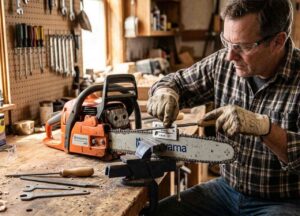
Cut direction also reveals chain condition. A chain that cuts crooked or pulls to one side usually has unevenly sharpened cutters or dull teeth on one side of the chain.
Increased vibration and chatter during cutting also signal dull cutters. Smooth cutting action disappears once the edge begins to round off.
Regular inspection before and after use helps identify these problems early. Quick sharpening at the first sign of dullness takes far less time than restoring heavily worn cutters.
Tools Required for Proper Chain Saw Sharpening
Several specialized tools make the sharpening process accurate and consistent. Proper equipment ensures that each cutter maintains the correct angle and depth.
A round file designed for chain saw sharpening remains the most common tool. File diameter must match the chain pitch. Typical sizes range from 4.0 mm to 5.5 mm depending on the chain model.
A file guide helps maintain the proper sharpening angle. Guides often include markings that align with the bar to ensure the correct filing direction.
Flat files play an important role in adjusting depth gauges. These small metal bumps located in front of each cutter control how deeply the cutter bites into the wood.
Depth gauge guides assist with maintaining the proper height difference between the cutter and depth gauge. Correct height allows the cutter to remove wood efficiently without grabbing aggressively.
Bench-mounted chain grinders serve as another option, particularly in maintenance shops and professional environments. These machines use a rotating grinding wheel to sharpen each cutter at a precise angle.
Field operators often prefer manual files due to portability and simplicity. Hand filing remains the most widely used sharpening method for forestry crews and maintenance technicians.
Understanding Chain Saw Cutter Geometry
Effective sharpening requires knowledge of cutter design. Each cutter contains several critical surfaces that determine how the chain cuts through wood.
The top plate forms the upper cutting surface. A sharp top plate edge slices through wood fibers during the cutting process.
The side plate forms the vertical cutting edge that works with the top plate to create the cutting corner. That corner represents the sharpest point of the cutter.
A properly sharpened cutter maintains a precise angle along both surfaces. Manufacturers typically recommend top plate filing angles around 25 to 35 degrees depending on the chain type.
Depth gauges control the amount of wood removed during each pass. These gauges sit slightly lower than the cutting edge. Proper spacing allows the cutter to bite into the wood without creating excessive kickback risk.
Consistent angles across all cutters ensure smooth cutting and balanced chain movement. Uneven sharpening leads to vibration and crooked cuts.
Step-by-Step Process for Sharpening a Chain Saw
Preparation begins with securing the saw. A vise or saw stand holds the bar firmly while sharpening. Stability allows accurate file strokes and reduces fatigue during the process.
Chain tension should be adjusted properly before sharpening. A correctly tensioned chain sits snugly against the bar while still allowing movement by hand.
The sharpening process begins by identifying the shortest cutter on the chain. That cutter becomes the reference length. All other cutters should be filed to match that length to maintain consistent cutting performance.
Place the round file into the cutter so that approximately one fifth of the file diameter extends above the top plate. This positioning creates the correct cutting edge profile.
File strokes should move smoothly across the cutter from the inside toward the outside edge. Only forward strokes remove metal. Light, consistent pressure helps maintain even sharpening.
Two to five strokes typically restore the edge if the cutter is moderately dull. Severely worn cutters may require additional strokes.
Once all cutters facing one direction are sharpened, rotate the saw or reposition yourself to sharpen cutters on the opposite side. Consistency remains critical throughout the entire chain.
Depth gauges should be checked after several sharpening cycles. A flat file and depth gauge guide remove small amounts of material to maintain the correct height.
Final inspection ensures all cutters appear uniform and sharp. Clean wood chips should appear during the next cutting operation if sharpening was successful.
Maintaining Proper Sharpening Angles
Correct angles determine how efficiently a chain saw cuts. Deviating from recommended angles reduces performance and increases wear on the chain.
Most chain manufacturers specify filing angles between 25 and 35 degrees along the top plate. Softwood cutting often benefits from slightly steeper angles, which increase cutting speed.
Hardwood cutting typically uses a slightly lower angle to improve durability. That configuration reduces edge chipping when cutting dense material.
File guides simplify angle control. These tools contain alignment markings that rest against the guide bar during filing. Alignment helps maintain a consistent filing direction across every cutter.
Equal numbers of file strokes on each cutter help maintain balanced cutting. Uneven sharpening leads to chains that pull toward one side during cutting operations.
Maintaining proper angles may seem minor, yet it significantly affects cutting efficiency and chain longevity.
Depth Gauge Adjustment and Its Importance
Depth gauges control the thickness of wood chips produced during cutting. Proper adjustment ensures that cutters remove the correct amount of wood with each pass.
Gauges that sit too high reduce cutting efficiency. Cutters cannot engage the wood deeply enough, which results in slow cutting and fine sawdust.
Gauges that sit too low create overly aggressive cutting action. Excessive bite increases kickback risk and causes rough cutting.
Depth gauge guides provide the correct reference height for filing. These guides sit over the chain while a flat file removes excess metal from the gauge.
Routine sharpening gradually lowers the cutters. Gauge height must be adjusted periodically to maintain the correct relationship between the cutter edge and gauge height.
Experienced operators typically check gauge height every three to five sharpening cycles.
Safety Considerations During Sharpening
Sharpening involves direct contact with cutting surfaces and metal filings. Proper safety precautions protect the operator and extend equipment life.
Protective gloves reduce the risk of cuts from sharp chain edges. Chains become extremely sharp once properly filed.
Eye protection helps prevent metal filings from entering the eyes during the sharpening process.
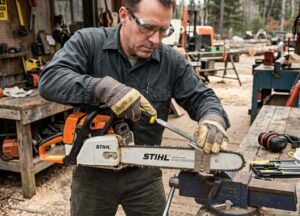
Engaging the chain brake prevents unwanted chain movement. Many technicians still prefer disconnecting the spark plug wire as an additional precaution.
Work should take place in a well-lit environment with stable equipment support. Proper lighting helps ensure accurate filing angles and consistent sharpening results.
Patience also plays a role in safety. Rushing through the process often leads to uneven cutters and poor cutting performance.
Routine Maintenance That Supports Sharp Chains
Chain sharpness depends heavily on overall saw maintenance. Several additional practices support consistent cutting performance.
Proper lubrication keeps the chain moving smoothly across the guide bar. Insufficient lubrication creates heat and accelerates cutter wear.
Guide bar condition also affects cutting performance. Burrs along the bar rails can interfere with chain movement and cause uneven wear.
Bar rotation helps distribute wear evenly. Many technicians rotate the guide bar each time the chain is replaced or sharpened extensively.
Clean air filters support engine performance, which helps maintain consistent chain speed during cutting operations.
Attention to these maintenance practices ensures the sharpening work delivers maximum benefit.
Final Thoughts
Reliable cutting performance depends on consistent chain maintenance. Regular sharpening keeps chains working efficiently while reducing stress on the saw’s engine and components. Operators who sharpen their chains frequently spend less time forcing cuts and more time completing the job.
Understanding cutter geometry, using the correct tools, and maintaining proper filing angles produce noticeable improvements in cutting speed and control. Regular depth gauge checks ensure the chain removes wood efficiently without aggressive grabbing.
A sharp chain also improves safety. Controlled cutting reduces kickback risk and allows operators to maintain better control of the saw.
Consistent sharpening habits quickly become routine. Field crews and equipment technicians who follow these practices keep their cutting tools ready for demanding work conditions day after day.